

Safety Planning and Multi-Scope Coordination in Equipment Installation
Safety planning has to be treated as a fixed requirement of an equipment installation project, not a line item that gets negotiated down to hit a budget. Even with a solid site plan and verified information in hand, an installation project still carries real physical risk on nearly every job. Heavy loads, tight tolerances, machinery moving through spaces it was never designed for, and work happening in and around existing operations, plant personnel, and other trades all add risk that a plan on paper can’t fully account for.
Safety Margin Is Not a Negotiable Line Item
Owners do not always see the value of paying the margin a job actually requires, whether that means a larger crane, a more conservative rigging plan, or an engineer-reviewed lift plan instead of in-the-field improvisation. Telling a client no on something unsafe, even at the risk of the relationship, is simply part of the job, and it’s usually what earns long-term trust rather than costing it. Clients remember the contractor who told them the truth about what a lift or an installation sequence actually required, especially after seeing what happens on projects where nobody did and the results were poor.
Why Certified Lift Plans Exist
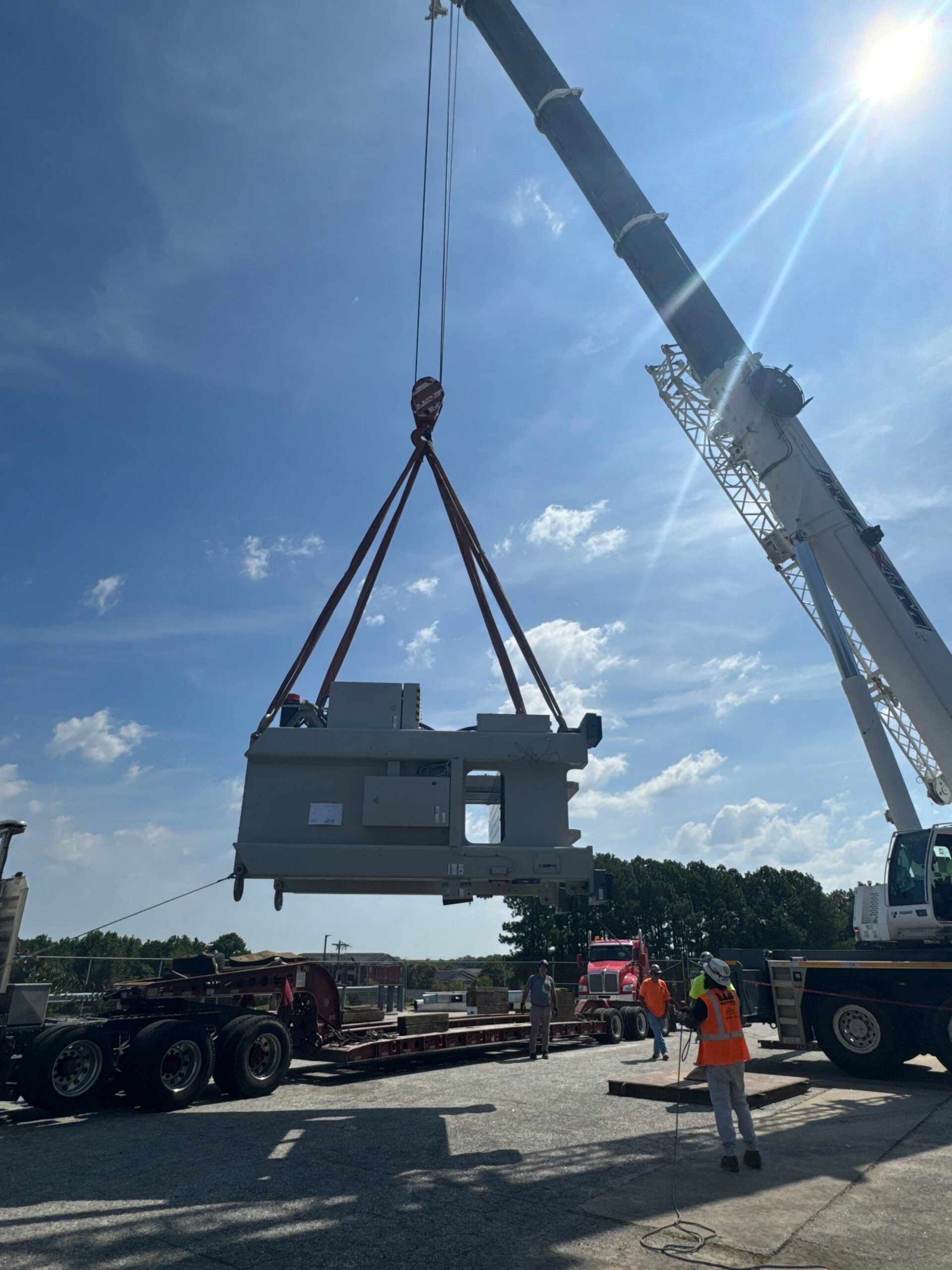 Certified lift plans exist because equipment installation carries real failure potential, not hypothetical ones. A weld point that has quietly corroded over decades, a crane outrigger sitting inches from a buried utility, a long transport load moving through a site that was never fully scouted: these are the kinds of details that need to be evaluated, discussed, and made part of a lift plan to separate a routine lift from a catastrophic one. A certified lift plan brings engineering review into a process that would otherwise depend entirely on field judgment in the moment, and it accounts for failure points that are not visible from a walk-through alone because every element of the lift is documented and field verified prior to execution of the lift.
Every person on the crew carries standing authority to stop work, at any point and for any reason, and that authority doesn’t get negotiated away. The projects that go wrong are rarely the ones where someone raised a concern. They are the ones where a concern went unspoken because stopping work felt like it would cause more of a problem than continuing.
The Best Installations Are Rarely a Single Scope
Some of the strongest equipment installation projects are multi-scope, bringing together millwright, concrete, structural engineering, electrical and piping. These trades frequently end up working on the same site at the same time, since almost all equipment installations require these trades. Someone has to design and pour a foundation. Someone has to confirm the existing structure can actually carry the load before new equipment lands on top of it. Piping and electrical utilities have to tie in without conflicting with rigging or machine maintenance and operation clearances.
Planning for that overlap from the start and bringing all trades to the planning table early, rather than treating each scope as a separate hire brought in only when a conflict shows up, is what turns a complicated install into a coordinated one. A structural engineer who confirms a mezzanine can support new equipment before installation begins prevents a much more expensive conversation after the equipment is already staged. A concrete team looped in during the planning phase, rather than called in reactively, can pour a foundation on a timeline that actually matches when the equipment will arrive. Equipment installation, piping and electrical partners can sequence the installation such that they all can maximize their efficiencies and deliver to the client the most cost effective and timely installation when this is done properly. The whole Integrated Project Delivery (IPD) approach has proven this out time and again.
What This Means for Planning an Installation
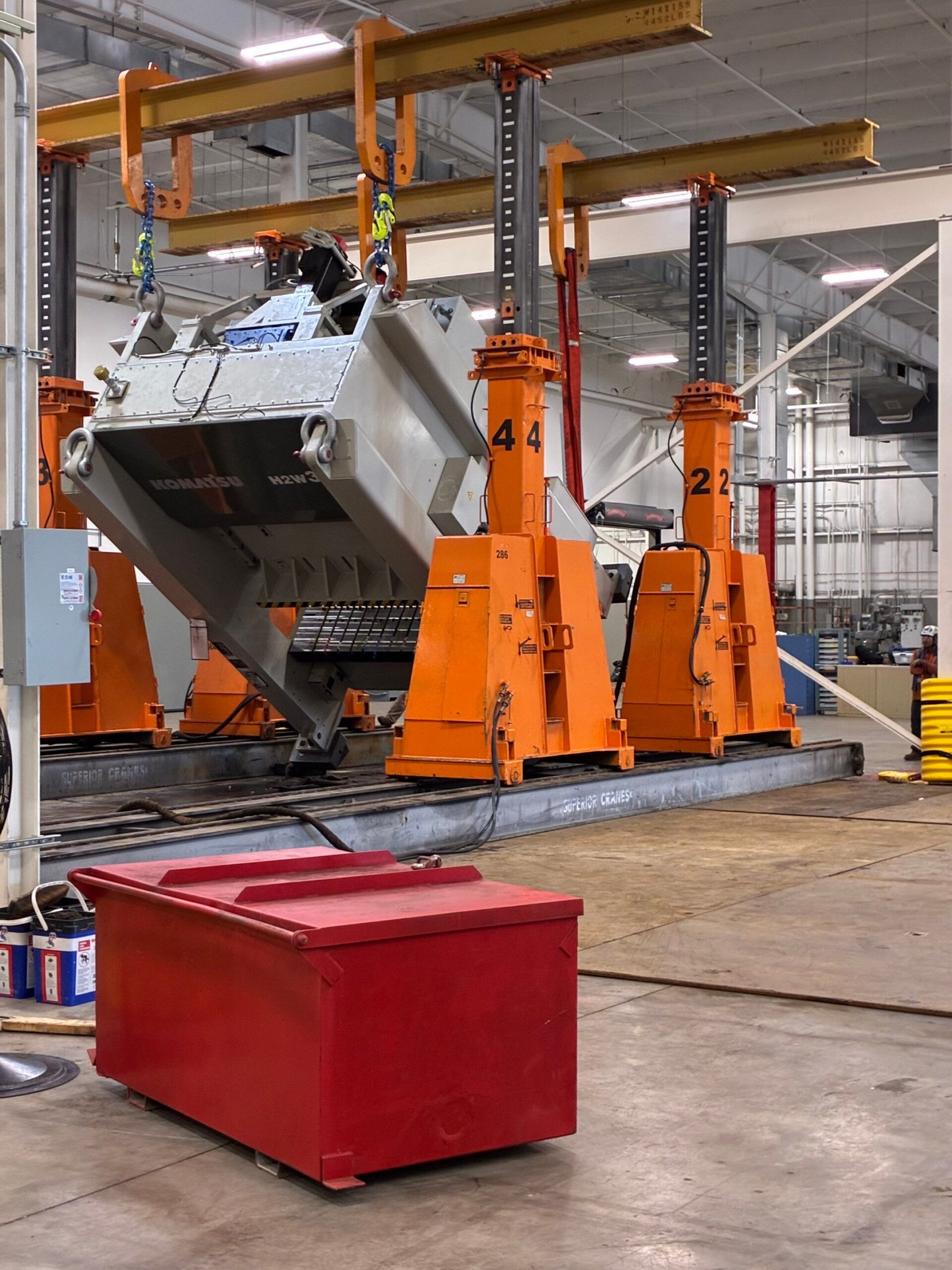 Treat safety margin, project planning, crane sizing, and certified lift plans as fixed costs built into the project from the start, not items to be trimmed to meet a budget. Confirm that every person on the installation crew has clear, standing authority to stop work without hesitation. And bring in every relevant scope, engineering, concrete, electrical and piping, during the planning stage rather than after a conflict surfaces in the field.
Taken together with the rest of the complete guide, site preparation, verified information, and early coordination across every trade on site form the three pillars of a well-planned equipment installation. None of it eliminates risk entirely. But the projects that go well are rarely lucky. They are the ones where somebody asked the right questions early, verified what could be verified, and refused to skip the steps that protect people and the client’s investment.
About the Author
Scott Walker serves as Millwright Division Manager for Wayne Brothers’ Industrial Group, bringing 35 years of construction and millwright expertise to the organization. In this role, Scott holds executive-level responsibility for project performance, overseeing all bidding and estimating activity while providing strategic leadership across projects and staff. His deep technical background combined with his management experience allows him to guide teams through complex scopes with a focus on quality, schedule, and client success.
Read the Guide on How to Prepare for InstallationShare This Post


Keep Up With Wayne Brothers
Return to the News page for more updates. Any questions? Shoot us an email.
Back to News Contact Us